
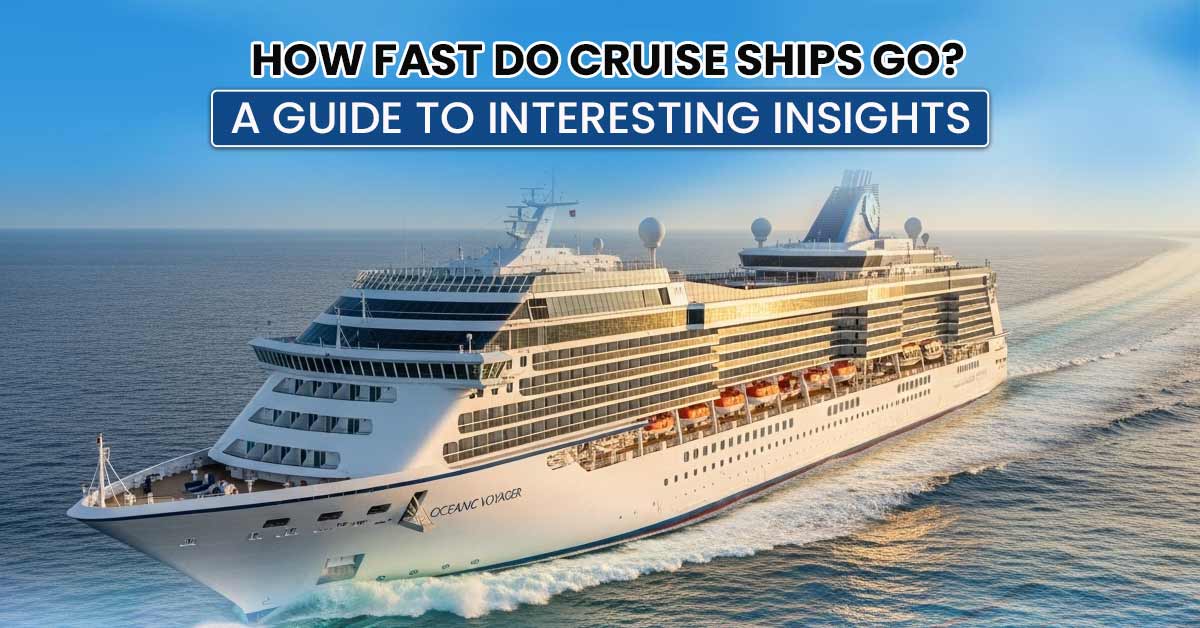
Cruise ships are like floating cities that can accommodate more than 7,600 passengers. They are designed to provide a comfortable experience to every traveler. However, given their gigantic size, you must be wondering, “How fast do cruise ships go?”
The fact is that how fast they “can” go is different from how fast “they choose” to go. This blog discusses the average speed of a cruise ship, how it differs from its maximum speed, factors that influence the speed, and some notable examples of ships.
30-Second Summary
Traveling on a cruise ship is an exceptional experience. You can enjoy your time onboard and at every destination. You can also enjoy scenic views. Ever wondered how that’s possible? It is because of the speed at which a ship sails.
The speed impacts everything, from passenger comfort to time management. In this blog, we will talk about how fast do cruise ships go, their average and maximum speed, examples, and factors affecting the speed.
Average Cruising Speed of Cruise Ships
The measurement unit of a cruise ship’s speed is knots. One knot represents the speed of one nautical mile per hour. It is equal to 1.852 km/h. To understand how fast do cruise ships go, we need to know their average speed in knots. The speed of a cruise ship at which it sails is 18 to 22 knots (20 to 25 miles per hour).
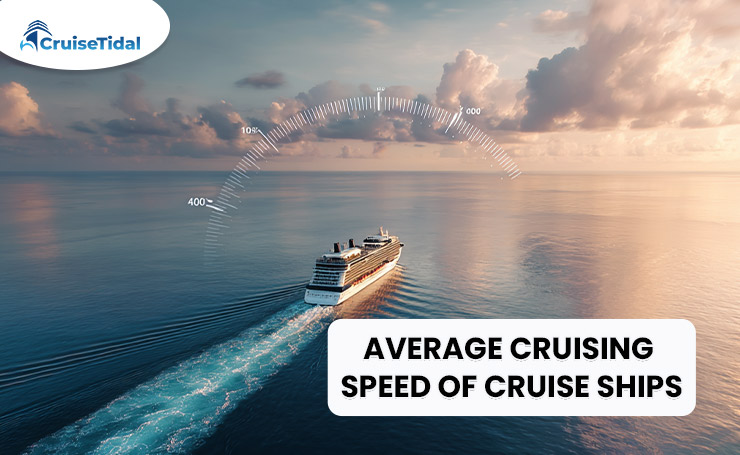
The top speed of cruise ships is three knots faster than their average cruising speed. The fastest ship is Cunard’s Queen Mary 2. Its speed is 30 knots, which is 34.5 mph or 55.56 km/h.
The average speed of a cruise ship depends on how far cruise ships travel in a day. There is a very rare chance that a cruise travels at its top speed. In fact, if the distance of the ports in the itinerary is less, the speed of the ship will be much lower.
Knots to Miles per Hour Conversion
If you want to convert knots to miles per hour, multiply the knots by 1.151. For reference, you can see the table below.
| Knots | Miles per Hour (mph) | Kilometers per Hour (km/h) |
| 20 | 23.02 mph | 37.04 km/h |
| 22 | 25.32 mph | 40.74 km/h |
| 24 | 27.62 mph | 44.45 km/h |
| 30 | 34.52 mph | 55.56 km/h |
Factors Influencing the Speed of a Ship
Different factors play a role in determining the speed of a cruise ship.
Ship Size and Design
Cruise ships that have bigger dimensions operate with a powerful system and move faster. Ships with big dimensions and heavy weight maintain a reduced speed for passenger comfort and security requirements.
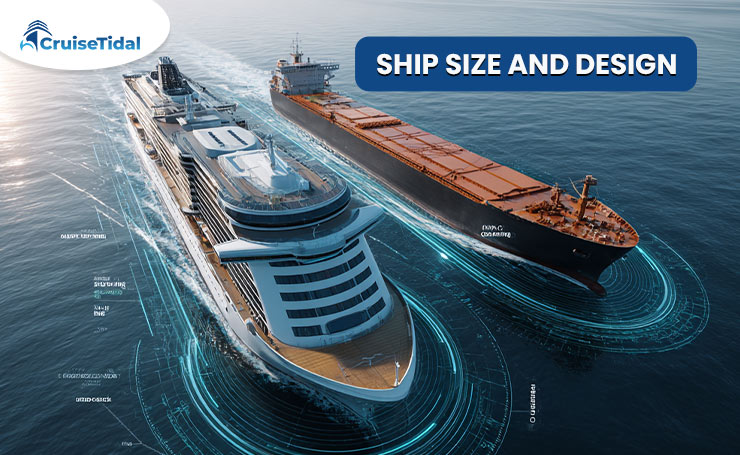
Ships that have a smooth design do not drag when navigating the sea. It makes them reach their operating speed more efficiently.
Weather Conditions
Unfavorable weather, such as sailing in heavy winds and storms, forces cruise ships to travel at a slower pace. Good weather conditions allow them to travel at their average speed.
Fuel Efficiency
Higher speeds require more fuel consumption. To reduce it and its impact on the environment, ships maintain an average speed while sailing.
Ocean Currents and Tides
Ocean waves and tides either help the ship or obstruct its movement. Fair ocean currents help vessels move forward by requiring less engine effort.
Itinerary Requirements
Cruise ships organize their itineraries by calculating port distances and setting times at which the ship will dock at the port. Ships adjust their speed according to this schedule.
The Role of Speed in Passengers’ Comfort
Passenger comfort is a main factor in deciding how fast cruise ships go at sea.
Onboard Activities: Passengers enjoy the leisurely cruising and use their time to explore dining options, entertainment, relaxation facilities, and recreational activities.
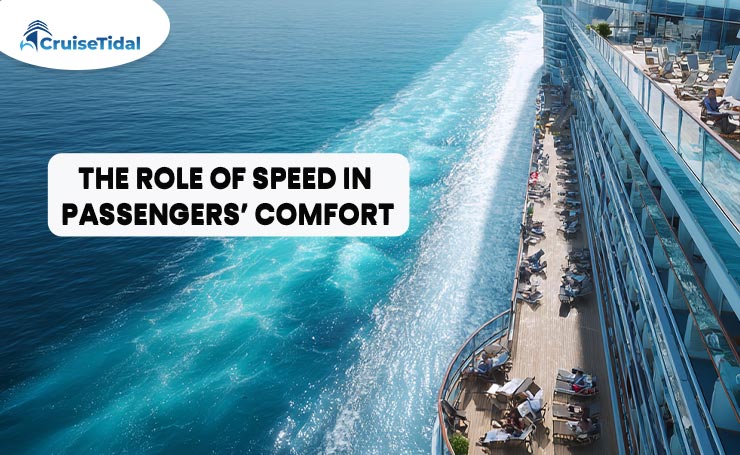
Scenic Enjoyment: Passengers soak in the beautiful scenery when ships sail at a moderate speed.
Time Management: Speed control provides passengers ample time to explore each destination through timely arrival and departure.
Notable Examples
Take a look at the examples below that show the cruising speed of different ships.
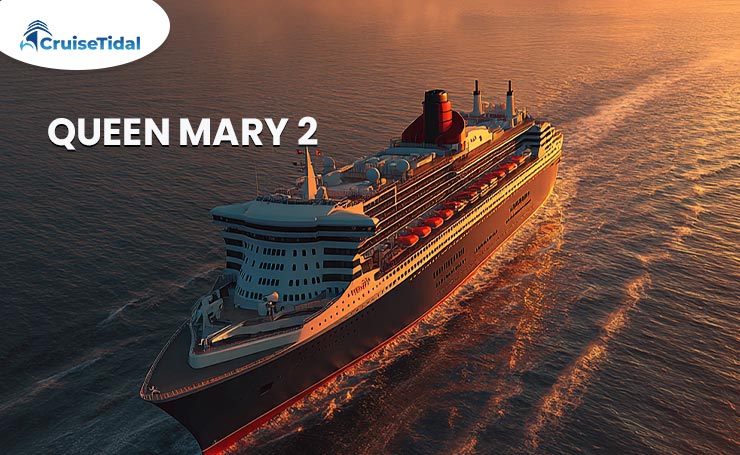
Queen Mary 2
It is considered the fastest ship, reaching a speed of 30 knots. It is an ocean liner, but technical categories recognize it as different from a cruise ship. The reason is that it specializes in transatlantic travel with durability in mind.
SS United States
This ocean liner remains the leader in cruise ship speed. In contrast to Queen Mary 2’s speed, it operates at the speed of 38 knots (44 mph or 70 kph). Since the beginning of passenger ships, the world has not seen such exceptional shipping capabilities.
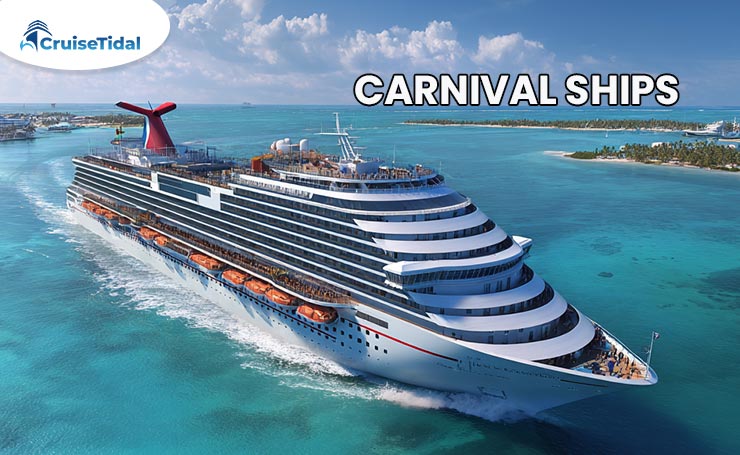
Carnival Ships
Carnival Cruises is a favorite of many travelers. It operates at a speed of 20 to 24 knots (23 to 28 mph). This speed is ideal for optimal efficiency and passenger comfort. The speed of the Carnival ships depends on many factors, such as itinerary, sea conditions, and engine capabilities.
Average vs Maximum Speed of Cruise Ships
The average speed of a cruise is designed to provide a comfortable experience to all passengers. It is around 20-24 knots. On the other hand, the maximum speed can be upto 30 knots.
For example, Carnival Vista travels at an average speed of 22 knots. Queen Mary 2 travels at an average speed of 26 knots, but its maximum speed is 30 knots.
How Fast Do Cruise Ships Go at Night
You must have wondered, “Why do cruise ships go so slow at night?” The average speed of a vessel at night is 18 to 22 knots. It is due to several factors.
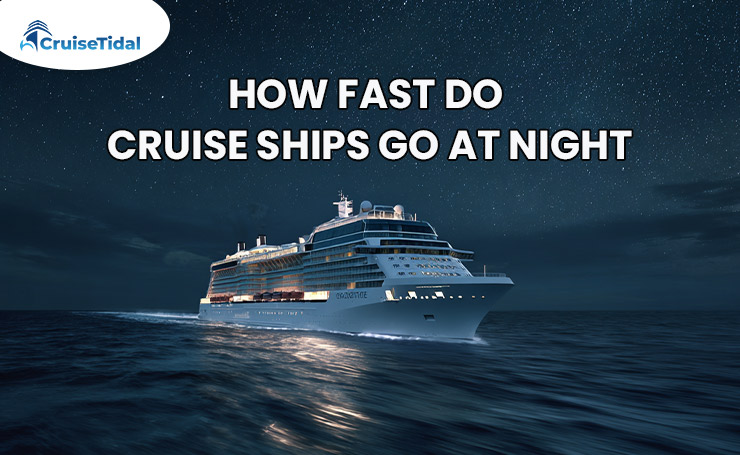
- At night, the visibility reduces, and it becomes important to navigate the waters carefully.
- Steady speed improves passenger experience.
- It also results in fuel efficiency, which lowers operational costs.
How Far Cruise Ships Travel in a Day
On average, a cruise ship can travel 480 to 600 nautical miles in one day. A ship travels 41 km/h × 24 hours = 984 km (611 miles) at 22 knots. This speed is ideal and carries passengers comfortably to different destinations on multi-day itineraries.
Final Thoughts
So, how fast do cruise ships go? 20 to 24 knots is the average speed at which a cruise ship travels. However, there are exceptions, especially when it comes to ocean liners. One such example that we explored is Mary Queen 2.
Now, when you travel on a ship next time, remember that even though it feels slow, your cruise ship is covering hundreds of miles every day to take you to your next destination.
For more information about cruises, explore CruiseTidal.
FAQs
How fast do Carnival Cruise Ships go?
Carnival ships sail at 18 to 22 knots. However, their maximum speed is 23 to 24 knots, but they rarely travel at it.
What is a Ship’s Maximum Speed in km per hour?
44–56 km/h (24–30 knots) is the maximum speed of a cruise ship. However, they travel at this pace in rare conditions.
What is the Average Cruise Ship Speed in knots?
The average speed of cruise ships is 20 to 24 knots.
What is the Fastest Cruise Ship?
The Queen Mary 2 is often regarded as the fastest passenger ship. It is technically an ocean liner, not a cruise ship. But it does carry passengers in luxury.
What is the Difference between Knots and Nautical Miles?
Knots is the measurement unit of a cruise ship’s speed, while the distance it covers is measured in nautical miles.
Why don’t Ships sail at their Maximum Speed?
Sailing at full speed results in more fuel consumption, vibration, and puts more strain on the engines. The moderate speed ensures efficiency.
Why are Cruise Ships slower than other types of ships?
Unlike cargo and military ships, cruise vessels are slow as they prioritize safety, careful navigation, and passenger comfort.
